Beyond Matcha is reader-supported. When you buy through links on our site, we may earn an affiliate commission at no extra cost to you. As an Amazon Associate we earn from qualifying purchases.
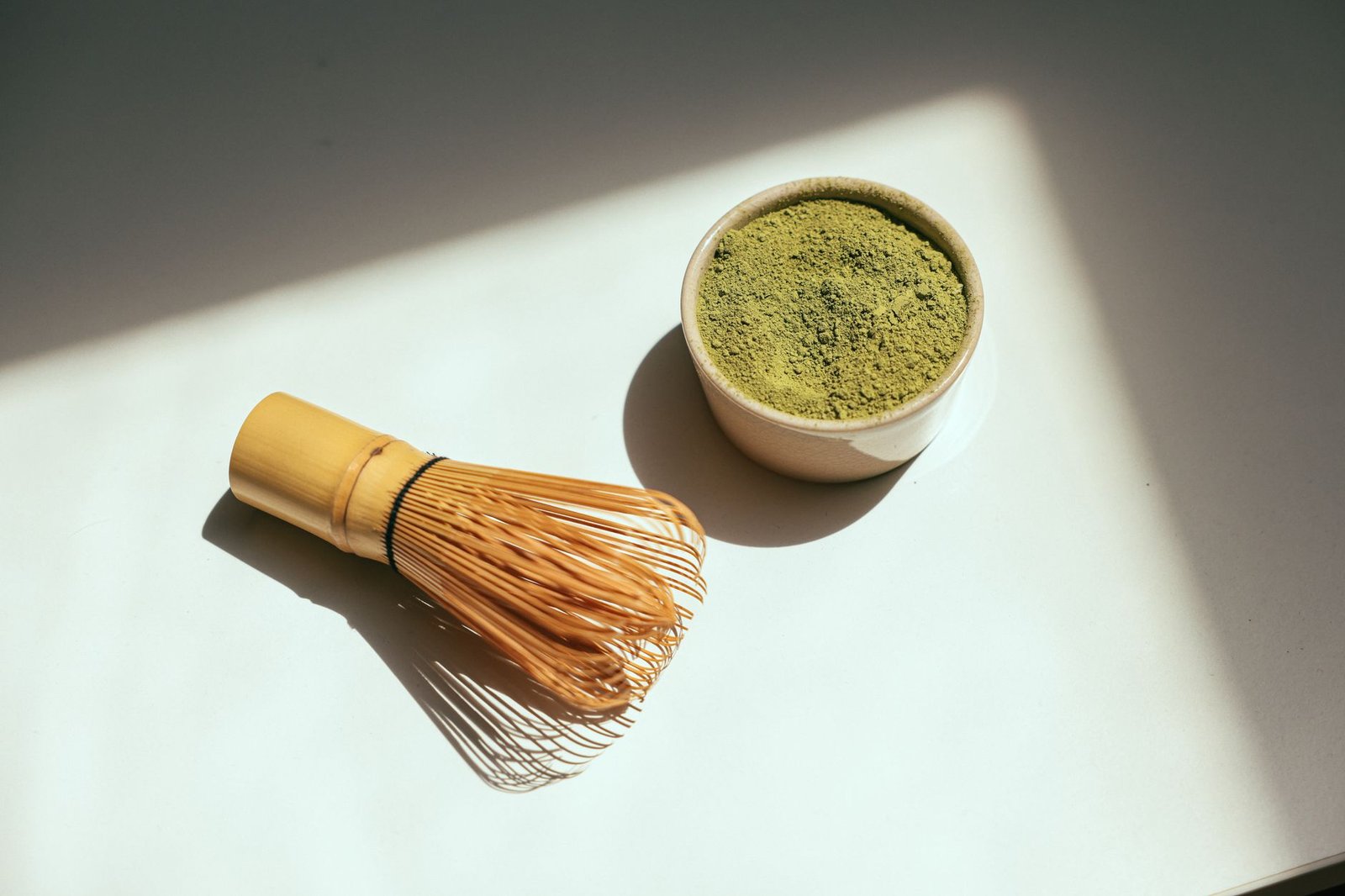
Walk down any matcha aisle, physical or online, and nearly every tin says “ceremonial.” Some of those powders are vivid, sweet and meant to be whisked with nothing but water. Others are dull, bitter and only palatable with a lot of milk and sugar. The label alone will not tell you which one you are holding.
This guide explains what the grade names actually mean, which details on a package are more useful, and how to match a matcha to the way you drink it. If you are still choosing between tea styles, our explainer on matcha vs hojicha covers the basics first.
Key takeaways
- “Ceremonial” and “culinary” are marketing labels, not regulated Japanese grades.
- Harvest, shading, origin and freshness tell you more about quality than the grade name.
- Ceremonial matcha is for drinking with water; culinary is for milk, sugar and baking.
- For lattes, a robust ceremonial or a good culinary powder both work; pick by budget and how often you drink it.
- Buy small, store cold and finish within a month or two of opening.
Matcha we recommend by use
- 1
Best for everyday lattes
Naoki Matcha Superior Ceremonial BlendFirst-harvest Uji matcha with enough body to stand up to milk, and smooth enough for an everyday bowl of usucha.
Read our review · Check price → - 2
Best for straight tea on a budget
Naoki Matcha Organic Ceremonial First Spring BlendOrganic first-harvest matcha from near Kagoshima, described as mellow with virtually no bitterness: a gentle introduction to drinking matcha with water.
Check price → - 3
Best for cafe-style drinks
Jade Leaf Matcha Artisanal Barista EditionA ceremonial first-harvest blend designed for lattes, in 50 g vacuum pouches that are easier to finish while fresh.
Check price → - 4
Best for baking and smoothies
Jade Leaf Organic Culinary Grade MatchaOne of Amazon’s most-rated matcha powders, with more than 80,000 ratings. Sourced from Uji and Kagoshima and priced for recipes that use matcha by the spoonful.
Check price →
The grades are not official
There is no Japanese government standard that defines “ceremonial grade” or “culinary grade.” Both terms are largely Western marketing language. In Japan, matcha is more often sold by producer, blend name and intended use, and a tea house’s top-tier matcha for koicha (thick tea) is a very different thing from what an import brand might label ceremonial.
That does not make the terms meaningless. Used honestly, ceremonial signals a matcha meant to be drunk on its own with water, and culinary signals a powder designed as an ingredient. Some brands add tiers in between, such as “premium,” “barista,” “latte” or “daily” grade. Treat all of these as the seller’s description of intended use, not as a guarantee of quality.
What actually makes matcha taste better
To understand why matcha varies so much, it helps to know how it is made.
Shading. Tea bushes destined for matcha are covered for roughly the last few weeks before harvest. Less sunlight slows the conversion of the amino acid L-theanine into catechins, which keeps the leaf sweeter and more savory (umami) and less bitter. Shading also boosts chlorophyll, which is where matcha’s vivid green comes from.
Harvest. The first harvest of spring (ichibancha), usually picked from late April into May, produces the most tender, flavorful leaves. Later harvests in summer and autumn are tougher, more astringent and less sweet. Ceremonial matcha is typically first-harvest; culinary matcha often includes later harvests.
Processing. The shaded leaves are steamed, dried and stripped of stems and veins to make tencha. Tencha is then ground into powder. Traditional granite stone mills grind slowly, producing only a few dozen grams an hour, which limits heat and gives an extremely fine, even powder. Many producers now also use faster mechanical mills, especially for culinary grades.
Origin. Uji in Kyoto Prefecture is the region most associated with matcha, and Nishio in Aichi Prefecture is another historic center. Kagoshima, in the far south, has grown into a major producer, often with different cultivars and a softer, rounder style. Fukuoka (Yame) and Shizuoka also produce matcha. None of these is automatically better; a good producer matters more than a prefecture on the label.
Ceremonial vs culinary, side by side
| Ceremonial (as typically used) | Culinary (as typically used) | |
|---|---|---|
| Harvest | First harvest, youngest leaves | Often later harvests, sometimes blended |
| Color | Vivid, bright green | Olive to yellowish green |
| Flavor | Sweet, savory, smooth, low bitterness | Stronger, more bitter and astringent |
| Texture | Extremely fine, silky | Fine but often slightly coarser |
| Best use | Usucha or koicha with water; simple lattes | Baking, smoothies, sweetened lattes, cooking |
| Cost | Higher | Lower per gram |
The table describes good examples of each. A poor ceremonial matcha can easily be worse than a good culinary one, which is why the details below matter more than the label.
How to read a matcha label
Look for specifics. A trustworthy listing usually tells you some of the following:
- Origin: a named region (Uji, Nishio, Kagoshima, Yame) rather than just “Japan,” or worse, no origin at all.
- Harvest: “first harvest” or “first flush” if it is meant for drinking straight.
- Cultivar or blend: named cultivars such as Okumidori or Samidori suggest a producer that cares about flavor.
- Freshness: a production or grinding date, or at least a clear best-by date. Matcha starts losing aroma and color soon after grinding.
- Packaging: opaque, airtight tins or sealed pouches. Clear jars and large unsealed bags are red flags.
Then look at the powder itself when it arrives. Good matcha is bright green, smells sweet and grassy rather than hay-like, and feels silky between your fingers. If it is dull, smells flat or tastes harshly bitter even with cool water, it is probably old, low-grade or both.
Matching the matcha to how you drink it
You drink matcha with water (usucha). Buy a first-harvest ceremonial matcha and pay attention to sweetness and bitterness descriptions. A mellow powder such as Naoki’s Organic First Spring Blend is gentler for beginners than a bold latte blend. Premium tins from established tea houses, such as those we cover in our Maeda-en Shiki matcha review, are worth trying once you know what you like.
You drink lattes most days. This is where the grade debate matters least. A sturdy ceremonial blend with some backbone gives a greener, cleaner latte; our Naoki Superior Ceremonial Blend review looks at one built for exactly this. The most delicate, expensive matcha is wasted under milk.
You bake, cook or blend smoothies. Buy culinary. Its stronger, more bitter character is an advantage when it has to compete with flour, butter, sugar and fruit, and you will use a lot more of it. Our review of the Jade Leaf matcha latte bundle covers a starter kit that pairs powder with tools.
Freshness and storage
Even excellent matcha degrades quickly once opened. Air, light, heat and moisture all dull its color and flatten its aroma.
- Buy a size you can finish within one to two months of opening; 30–40 g tins suit occasional drinkers.
- Keep unopened tins in the fridge, sealed. Let them come to room temperature before opening, to avoid condensation.
- After opening, press out the air, seal tightly and store cold, away from strong-smelling foods.
- Sift before whisking. Fine powder clumps easily, and sifting is the simplest fix.
A note on caffeine and health claims
Matcha contains caffeine and L-theanine, and because you consume the whole powdered leaf, it delivers more of both than a cup of brewed green tea made from the same weight of leaf would. A typical serving is generally lower in caffeine than a standard cup of brewed coffee, but amounts vary by leaf and dose.
Be wary of listings that promise specific health outcomes. Green tea is a reasonable part of a balanced diet; it is not a treatment for anything. Choose matcha for how it tastes and how you like to drink it.
Frequently asked questions
Can I use culinary matcha to make tea?
You can, but expect a more bitter, astringent and less vivid cup. Culinary powders are designed to be balanced by milk, sugar and other ingredients. If you mostly drink matcha with water, ceremonial is worth the extra cost.
Is ceremonial matcha worth it for lattes?
It depends on how often you drink them and how sweet you make them. A bolder ceremonial blend gives a cleaner, greener latte; a quality culinary powder is perfectly good in a sweetened drink. Very delicate, expensive ceremonial matcha is usually wasted under milk.
Why is some matcha yellow or brownish?
Dull color usually points to later-harvest leaf, less shading, or powder that has oxidized from age, heat or air exposure. Fresh, high-quality matcha is a vivid, bright green.
How much caffeine is in matcha?
It varies with the leaf and the amount you use. Because you consume the whole leaf, matcha generally delivers more caffeine than the same volume of brewed green tea, but a typical 1–2 g serving is usually below a standard cup of brewed coffee.